
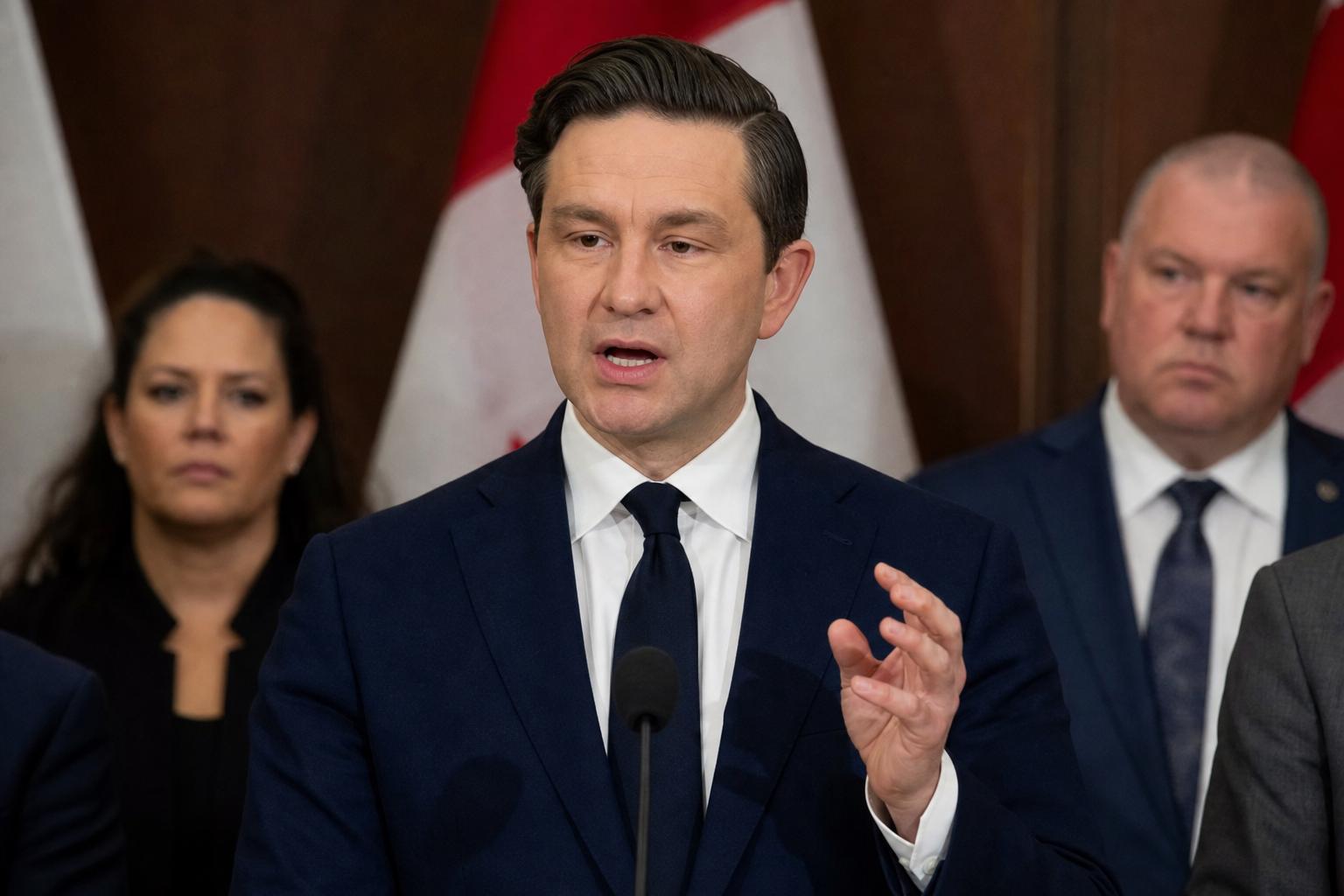
If you follow Canadian politics even casually, you’ve seen the name Pierre Poilievre pop up everywhere: cost of living, housing, carbon pricing, foreign interference, CBC, and endless clips from Question Period. You’re not imagining it—news about Canada’s Official Opposition leader has dominated national conversation. This in-depth guide cuts through the noise: what’s driving pierre poilievre news coverage, what his proposals would mean in real life, how to track credible updates, and the trade-offs that rarely make the front page.
Before we dive in, a quick note on timing: this guide reflects developments and widely reported positions through late 2024. Details shift fast in Ottawa, so treat this as a reliable foundation, then use the tools and sources listed here to verify the very latest updates on Pierre Poilievre and the Conservative Party of Canada.
Who Is Pierre Poilievre? A Snapshot That Explains the Headlines
Pierre Poilievre leads the Conservative Party of Canada and serves as Leader of the Official Opposition in the House of Commons. First elected as an Ottawa-area MP in 2004, he’s represented the region ever since, most recently the riding of Carleton. He won the Conservative leadership in 2022 after running a campaign centred on affordability, government accountability, and a promise to “Bring it home.”
His approach to politics is highly disciplined, highly online, and relentlessly focused on the everyday costs that Canadians can’t ignore: mortgages, rent, groceries, gas, and taxes. He prefers crisp, repeatable messages—“axe the tax,” “build homes, not bureaucracy,” “remove gatekeepers”—and he’s comfortable swinging hard in Question Period and on social media. Whether you agree with him or not, the communication style works: his clips travel, his phrases stick, and his policy fights show up in headlines the next morning.
Understanding pierre poilievre news starts with recognizing this blend: long experience in Parliament, a combative communications strategy, a focus on cost-of-living frustration, and an instinct to frame political fights as common sense versus bureaucracy. Once you see those threads, the day-to-day coverage makes more sense.
Why “Pierre Poilievre News” Dominates: The Forces Behind the Coverage
News cycles do not move in a vacuum. They orbit a few big concerns: household budgets, trust in public institutions, and the feeling that essential systems—housing approvals, health care backlogs, immigration planning, infrastructure—aren’t keeping up with population growth. Poilievre’s brand pins itself to those weak points. That drives coverage because millions of people see the same problems when they pay rent or call a family doctor.
There’s also the electoral math. As Leader of the Official Opposition, Poilievre is the most likely alternative prime minister in the eyes of many voters. Political reporters, business pages, and policy think tanks track his speeches because his policies could govern federal decisions on taxes, energy, and foreign affairs. Add the algorithm effect—his team packages content for social platforms—and you get a steady stream of pierre poilievre news even on days with no new bill or vote.
Finally, there’s friction. He is openly critical of the Bank of Canada’s handling of inflation, opposes the federal carbon price, wants major housing incentives tied to municipal performance, and pledges to reshape the CBC. Each position touches a large institution with entrenched interests. Institutions push back; coverage intensifies.
Deep Dives: What Poilievre Proposes and How It Would Play Out in Real Life
Here’s where headlines meet your hydro bill and property taxes. Every file below is a live wire in Ottawa because it affects Canadians directly. We’ll keep explanations clear and point to the practical takeaways Canadians can use.
Cost of Living, Inflation, and Taxes
Poilievre’s core message: life has become unaffordable. He connects inflation to federal deficits and the Bank of Canada’s emergency-era policies. Expect three themes whenever you see pierre poilievre news tied to affordability:
- Spending restraint: He argues for tight federal spending and “pay-as-you-go” budgeting—if government starts a new program, it must find equivalent savings elsewhere.
- Lower taxes on work and energy: The Conservatives frame relief through scrapping the federal carbon price and keeping more take-home pay in workers’ pockets.
- Competition and consumer protection: He has supported stronger competition law to push back on consolidation and high fees that filter down to grocery aisles, cellphone bills, and airfares.
Why this matters to Canadians: inflation and interest rates hit different households in different ways. Renters feel the squeeze through rising rents; homeowners feel it in payments and renewals; small businesses fight higher input costs. Poilievre’s argument is that Ottawa must focus on freeing supply (housing, energy, permits) and dialing down policies that add costs per unit of goods and services.
What to watch in the news: look for references to the Parliamentary Budget Officer (PBO) on fiscal costs of proposals, Bank of Canada statements on inflation drivers, and Statistics Canada releases that track food, shelter, and energy costs. When you see headlines tying Poilievre to “fiscal anchors,” this is the conversation.
Housing and Mortgages
Housing is where pierre poilievre news overlaps with your street corner. The diagnosis is straightforward: years of underbuilding, rapid population growth, cumbersome approvals, and scarce skilled trades. The remedy he proposes leans on targets, carrots, and sticks:
- Faster approvals and density: Tie federal infrastructure and transit dollars to measurable increases in completed homes, especially around stations and corridors.
- Build on public land: Sell or lease suitable federal properties (especially underused office buildings) for housing at scale, with near-term shovels in the ground.
- Skilled trades pipeline: Speed up recognition of foreign credentials and make it easier for provinces to certify experienced workers through standardized exams.
- Mortgage flexibility for first-time buyers: Conservatives have signalled openness to longer amortizations for first-time buyers, especially tied to new builds, paired with a plan to expand supply so price pressure doesn’t simply worsen.
Canadian context you can use: housing is a shared jurisdiction. Municipalities control zoning; provinces set building codes and professional licensing; Ottawa controls immigration intake, federal lands, and infrastructure dollars. Any federal housing plan has to work through provincial and municipal systems. When you read an update about “withholding transit funds unless cities build,” that’s Ottawa using the levers it actually owns.
Mortgage lens: if you’re renewing, the Bank of Canada’s policy rate and bond yields dominate outcomes. A federal government can’t order rates down, but it can try to reduce inflationary pressures over time. Watch for how a future Conservative government (if elected) would talk about new CMHC products, insured mortgage rules (like the stress test), and amortization rules. Those are federal levers with immediate effects on monthly payments and approvals.
Energy, Climate, and Carbon Pricing
Carbon pricing sits at the centre of Poilievre’s climate fight. He pledges to scrap the federal carbon price on fuels (the “fuel charge” that applies in backstop provinces) and promises to reduce emissions through technology and faster project approvals instead. Expect frequent coverage of this because it affects gas, home heating, and agriculture inputs.
What this means practically:
- Households: In provinces under the federal backstop, the fuel charge adds a visible cost at the pump and on heating fuels; households receive a quarterly Climate Action Incentive payment. Scrapping the charge would lower retail fuel costs but eliminate rebates. Net effects vary by driving distance, household size, heating type, and urban vs. rural living.
- Farms and small business: Conservatives argue the carbon price punishes essential activity with few alternatives and amplifies costs through supply chains. Watch for exemptions debates and measures aimed at grain drying, trucking, and greenhouse operations.
- Large emitters: Canada also has output-based pricing for heavy industry. Expect a Conservative tilt toward carbon capture, small modular nuclear, LNG export approvals (to displace coal abroad), hydro, and faster transmission builds—less emphasis on carbon taxes, more on permitting and investment.
Legal and international reality check: Canada’s provinces and courts have battled over Ottawa’s environmental powers. The Supreme Court upheld the constitutionality of carbon pricing, while striking down parts of the federal Impact Assessment Act in 2023. If a Conservative government kills the federal fuel charge, provinces can still run their own systems, and international trade regimes—like the EU’s carbon border measures—will influence how Canadian exports are treated. That’s why climate and energy are constant pierre poilievre news items: domestic affordability meets global market rules.
Crime, Bail, and Drug Policy
Expect steady coverage of crime, especially repeat violent offences and firearms policy. The Conservative message focuses on:
- Tightening bail for repeat violent offenders and those charged with serious gun crimes.
- Targeting smuggling at the U.S. border and organized crime rather than expanding prohibitions on licensed sport shooters.
- Opposing decriminalization of hard drugs outside narrow medical contexts; shifting emphasis to treatment and recovery beds.
On firearms, the Conservatives have opposed measures they say target lawful owners while leaving smuggling routes intact. On drug policy, they criticize decriminalization pilots that coincide with public disorder, arguing for addiction treatment capacity first. Each position produces local angles—crime trends vary widely by city—so watch municipal police boards and provincial attorneys general alongside Ottawa.
Immigration, Credentials, and Labour Shortages
Canada’s immigration levels rose rapidly in 2022–2024, while housing and infrastructure struggled to keep pace. Poilievre’s line is not anti-immigration; it’s “match levels to capacity and speed up pathways into the skilled trades.” Expect these planks:
- Credential recognition reform: A “test, not time” mindset—if an immigrant engineer, nurse, or electrician can prove competency through a standardized exam, provinces should be able to certify faster.
- Fraud and system integrity: Crack down on predatory recruiters and bogus programs; tighten rules so students and workers get real training and jobs, not just paper pathways.
- Linking immigration planning to housing and services: The argument is simple—don’t overpromise and underdeliver; align intake with new homes, transit seats, and clinic capacity.
Here’s the Canadian nuance: the feds control overall immigration targets and permits; provinces regulate most professions and education. When a pierre poilievre news item mentions “national testing standards,” remember Ottawa can fund and convene, but provincial regulators must opt in. Real progress requires intergovernmental deals, not just speeches.
Indigenous Partnerships and Natural Resources
Resource development and reconciliation are deeply linked. Conservative messaging emphasizes revenue sharing, community-led equity stakes, and faster approvals. The through-line: projects should be done “with Indigenous communities as partners,” not “to” them.
On reconciliation more broadly, Conservatives support practical outcomes—ending long-term boil-water advisories, improving Indigenous policing, and unlocking own-source revenues—while criticizing federal bureaucracy that stalls results. On legislation related to UNDRIP and environmental assessments, they have warned against frameworks they believe add uncertainty or veto-like effects. Expect any resource headline—mines, pipelines, hydro—to include an Indigenous partnership dimension in future coverage.
Digital Policy: C-11, C-18, and Online Harms
Poilievre and the Conservatives opposed the Online Streaming Act (C-11) and Online News Act (C-18), framing them as government overreach. Their arguments: C-11 risks algorithm interference for Canadian creators; C-18 backfired when platforms reduced or blocked news links. If you’re following pierre poilievre news, watch for positions on revising or repealing parts of these laws, plus a narrower, Charter-conscious approach to any future online harms framework focused on genuinely illegal content (child exploitation, terrorism) rather than broad speech controls.
CBC and Media Policy
“Defund the CBC” became a signature Poilievre line, but the details matter. The core idea is to significantly reduce or eliminate federal subsidies for English-language television and corporate operations while protecting services that serve linguistic minorities, the North, and Indigenous communities. Implementation would require changes to funding through Parliament, adjustments under the Broadcasting Act, and transition plans for regional news and radio.
Real-world impact varies by region. In major cities with multiple outlets, market alternatives exist; in remote or minority-language communities, CBC/Radio-Canada remains a primary source of news and culture. Expect any reform push to generate intense local coverage and parliamentary committee scrutiny about service continuity and Canadian content obligations.
Democratic Reform, Ethics, and Procurement
Poilievre’s positioning on ethics and accountability leans on repeat stories Canadians have seen: procurement cost overruns, heavy reliance on consultants, and slow Access to Information. Listen for these themes in future pierre poilievre news:
- Stronger spending controls and an expanded role for the Auditor General and Parliamentary Budget Officer.
- Limits on sole-source contracts and tighter conflict-of-interest rules.
- Faster, digital-first Access to Information and proactive disclosure of contracts.
- Foreign interference countermeasures: a foreign-agent registry, tougher rules on diaspora intimidation, and strengthened intelligence-to-policy pipelines.
Committee hearings are your window into this file. CPAC live-streams them; transcripts appear on Parliament’s website. If you want to verify a headline, go straight to the hearing video and watch the exchange yourself.
Foreign Policy: Ukraine, Israel–Hamas, China, and the Indo-Pacific
Conservatives have supported Ukraine’s defence against Russia and called for faster delivery of military aid. They have been strong backers of Israel after the October 2023 attacks by Hamas and have criticized United Nations votes they see as undermining Israel’s security. On China, they advocate a tougher posture: economic security screens, combatting espionage and foreign interference, and deepening ties with allies across the Indo-Pacific. Expect continued focus on supply chains, critical minerals, and defence procurement—files where Canada’s pace often attracts criticism across party lines.
How to Follow Pierre Poilievre News Without the Noise
You don’t need to live on social media to keep up. You need a simple system that balances speed with reliability.
Go Direct to Primary Sources
- Hansard (House of Commons Debates): Read exactly what was said in Question Period and debates. Searchable by keyword on the Parliament of Canada site.
- LEGIinfo: Track bills, see vote records, and read legislative summaries written by the Library of Parliament.
- CPAC: Watch speeches, scrums, committee meetings, and press conferences unfiltered.
- Parliamentary Budget Officer (PBO): Independent costing and economic analysis—vital for separating rhetoric from arithmetic.
- Auditor General of Canada: For deep dives into program performance and procurement.
- Statistics Canada and the Bank of Canada: Inflation, employment, GDP, rate decisions—facts first, spin later.
Pair National and Local Coverage
- National: CBC News, Radio-Canada, CTV, Global News, The Globe and Mail, National Post, Toronto Star, La Presse.
- Regional: The Vancouver Sun, Calgary Herald, Edmonton Journal, Winnipeg Free Press, The StarPhoenix, The Chronicle Herald, Le Devoir, The Gazette, Ottawa Citizen, and regional radio. Policy hits differently in Saskatoon than in Scarborough; local reporting catches that.
Use Party and Leader Channels—but Cross-Check
- Conservative Party and Pierre Poilievre’s official site, X (Twitter), YouTube, Facebook, Instagram: useful for seeing exactly how they frame a policy.
- Cross-check with independent analysis before you share. If something sounds too perfect—on any side—it probably is.
Set Up Light Automation
- Google Alerts for “Pierre Poilievre” and “Conservative Party of Canada” with region set to Canada.
- Follow key committees on CPAC or Parliament’s site: Finance, Public Accounts, Industry, Procedure and House Affairs (foreign interference), Heritage (media and online policy), Natural Resources.
Polls, Projections, and What They Actually Mean
Polling is a staple of pierre poilievre news, and it’s easy to misread. A national lead says less than you think if it’s lopsidedly concentrated in regions with fewer battleground ridings. Canada’s elections are decided at the riding level, with the 905 around Toronto, suburban Vancouver, and key pockets of Quebec often tipping the balance.
How to Read a Canadian Poll Like a Pro
- Check the firm and method: Nanos, Abacus, Léger, Ipsos, Angus Reid, and others use different methodologies. Online panels and live telephone polls can produce different snapshots.
- Margin of error equivalents: For online polls, you’ll see “credibility intervals” rather than classic margins of error.
- Regional crosstabs: Ontario is not Ontario. Peel, Durham, Ottawa–Gatineau, and Northern Ontario move differently.
- Seat models: A three-point national shift can produce a 30-seat swing if it moves the right suburbs.
Context matters. Fixed-election-date law points to October 2025, but Canada’s minority government dynamics mean elections can arrive early. Treat any “will certainly happen” headline with skepticism and scan multiple polls before forming a view.
Policy at a Glance: Comparing the Current Federal Approach and Poilievre’s Stated Direction
| Policy Area | Current Federal Direction (as of late 2024) | Poilievre/Conservative Direction | What to Watch |
|---|---|---|---|
| Carbon Pricing | Fuel charge with household rebates in backstop provinces; output-based pricing for large emitters | Scrap federal fuel charge; emphasize tech, permitting, nuclear, LNG; maintain industrial competitiveness by other means | How rebates end; provincial systems; trade impacts (e.g., EU carbon border) |
| Housing | CMHC programs, federal financing, selective 30-year amortization for first-time buyers on new builds | Link transit/infrastructure cash to higher housing completions; sell/convert federal land; faster skilled-trades recognition | Concrete targets; municipal buy-in; timelines on office-to-residential conversions |
| Spending & Deficits | Deficits during and after pandemic; gradual path to balance | “Pay-as-you-go”; spending restraint; priority on core services and infrastructure | PBO costings; departmental cuts; impact on program delivery |
| CBC/Media | Ongoing appropriations with restructuring at times | Significant reductions to English TV and corporate layers; protect minority-language/northern services | Transition plans; Broadcasting Act implications; regional news coverage |
| Online Policy | C-11 (Streaming), C-18 (News links), evolving online harms | Revise/repeal parts seen as overreach; narrower focus on illegal content | Creator income, platform responses, Charter challenges |
| Crime & Bail | Recent bail tightening; firearms controls expanded | Further bail reforms; border smuggling focus; rollbacks of measures seen as targeting lawful owners | RCMP/CBSA resourcing; court capacity; urban-rural differences |
| Immigration & Credentials | High intake; pilot projects for recognition; student program reforms underway | “Test, not time” national standards; align levels with housing/services; crack down on bad actors | Provincial regulator participation; seat capacity in trades and health |
| Foreign Policy | Support Ukraine; support Israel; manage China risks; Indo-Pacific Strategy | More hawkish on China; faster military aid; supply-chain security; critical minerals | Defence procurement timelines; export controls; sanctions regime |
Case Studies: Translating Policy into Daily Canadian Life
1) A First-Time Buyer in Surrey, BC
Under a Conservative housing approach, Surrey’s story would hinge on density around SkyTrain expansions and faster approvals. If Vancouver and Surrey municipalities hit aggressive housing completion targets, they’d earn bonuses in federal funding; if not, they’d face withheld transit dollars. For a first-time buyer, the potential upside is more townhomes and mid-rise options near stations, and potentially longer amortizations for new builds. The risk? Without enough trades, completions stall and prices hold firm. Watch local council votes and provincial permit reforms just as closely as Ottawa speeches.
2) A Family Heating with Oil in Nova Scotia
Atlantic Canada became a flashpoint when heating oil costs spiked alongside carbon pricing debates. If the federal fuel charge is scrapped, the family will see lower line items on fuel deliveries, but also lose rebates that arrive quarterly. The net effect depends on home efficiency, driving patterns, and rural travel. If the province maintains or introduces its own system, local policy—not Ottawa—becomes the deciding factor. Practical step regardless of politics: check provincial rebates for heat pumps and home efficiency; those programs can overshadow federal changes in real homes with drafty walls.
3) A Trucking Company in Saskatoon
Fuel, insurance, and parts costs matter daily. Removing the federal fuel charge lowers immediate diesel costs in backstop provinces, though the company will also weigh lost rebates that filtered indirectly to households (affecting demand). On the other hand, if a Conservative government speeds up approvals for prairie energy and transmission projects, broader input costs and regional growth can shift over time. Watch the Competition Bureau’s work on anti-competitive practices in logistics and the Canada Border Services Agency’s modernization—both matter more than slogans when a truck’s on the road at 3 a.m. in January.
4) An Immigrant Engineer in Mississauga
The credential bottleneck is real. A “test, not time” framework could mean national standardized exams recognized across provinces, letting experienced professionals prove skills without years of redundant schooling. But provincial regulators must say yes. The quickest proof this is working would be a flood of exam sittings and transparent pass/fail data by field, with provinces adjusting pathways in response. If you’re that engineer, keep an eye on Ontario’s regulated professions announcements and any federal-provincial accord that ties funding to measurable credential timelines.
5) A Franco-Manitoban Radio Listener
Discussions about CBC/Radio-Canada funding feel different in Saint-Boniface than in downtown Toronto. If a Conservative government reduces English-language television subsidies but protects minority-language services, local radio in French could continue while English TV changes shape. The details will live in appropriations bills and CRTC frameworks. Follow Winnipeg-based outlets and Radio-Canada’s Prairies coverage for local clarity that national headlines miss.
Risks, Trade-Offs, and Unanswered Questions
Clear-eyed voters ask two questions: what will this cost, and who carries the risk when plans run into real-world obstacles? Here are the honest friction points you’ll see debated in pierre poilievre news:
- Climate math: Ending the federal fuel charge removes a visible cost but also a visible tool for meeting 2030 targets. The alternative must scale fast—nuclear, carbon capture, hydro builds, LNG terminals, and cross-province transmission. Permitting reform is necessary but not magic.
- Fiscal anchors: Spending restraint can curb inflationary pressure and restore budget balance, but cuts have constituencies. The PBO will ask for details: which programs shrink, and how fast?
- Housing targets vs. municipal autonomy: Tying federal money to completions creates urgency, but cities face local pushback on density, limited staff capacity, and infrastructure gaps. Provinces control many bottlenecks.
- Credential reform and safety: “Test, not time” sounds simple until you write the exam and agree on standards across provinces. Expect slow, technical work. In health care, patient safety rightly dominates timelines.
- CBC transition: Cut too fast and some regions lose essential services; move too slow and reforms look hollow. Watch for bridging funds, asset sales or leases, and targeted protections.
- Central bank independence: Poilievre has sharply criticized the Bank of Canada. Any government must respect operational independence while holding leadership accountable. Markets pay attention to tone here.
- Foreign interference: A registry helps, but success depends on enforcement and community trust. Diaspora intimidation is subtle; public servants need clarity and resources to act.
What to Watch Next (As of Late 2024)
Even if you’re reading this months later, this checklist helps you navigate fresh headlines about Pierre Poilievre:
- Fiscal updates: Budgets, fall statements, and PBO reports that score affordability promises.
- Housing permits and completions: CMHC monthly data; municipal approvals; office-to-residential pilots in federal buildings.
- Carbon pricing milestones: Scheduled price changes; court rulings; provincial program shifts; international carbon border developments.
- Credential compacts: Any federal-provincial deals that set national exams and data-sharing for regulated professions.
- CBC restructuring proposals: Appropriations, CRTC filings, union negotiations, and regional service plans.
- Foreign interference measures: Legislation for a foreign-agent registry; intelligence-to-committee briefings; election security protocols.
Smart Reading: Six Filters for Any Pierre Poilievre News Story
- Source it: Is the claim linked to Hansard, a bill, the PBO, or a reputable outlet? If not, pause.
- Define the lever: Is this actually federal? Or a provincial/municipal file being waved at Ottawa?
- Quantify: What’s the cost per household, per month? Look for numbers, not adjectives.
- Timeline test: Is this a promise for “day one” or “over five years”? Implementation windows matter.
- Regional reality: Would this land differently in Calgary, Mississauga, and Chicoutimi? Likely yes.
- Trade-offs: If a tax or program disappears, what replaces the function it served?
Plain-Language Explainers for Common Headlines
“Axe the tax” explained
This refers to scrapping the federal fuel charge portion of carbon pricing. Households in backstop provinces currently pay more at the pump and receive quarterly rebates. Removing the charge lowers fuel bills but ends those rebates; the net effect is household-specific. Large emitters are governed by a different system; Conservatives say they’ll rely more on technology and permitting than carbon taxes.
“Build homes, not bureaucracy” in practice
Ottawa can’t rezone your lot, but it can tie billions in transit and infrastructure cash to housing completions and density near stations. Expect a scoreboard mentality: cities that approve and complete more housing get more money; laggards get less. Expect pushback from local councils that dislike sticks from Ottawa, and support from renters and first-time buyers desperate for supply.
“Defund the CBC” beyond the slogan
The policy discussion targets English TV and corporate bureaucracy with protections for minority-language and northern services. The question is sequencing: how to shrink subsidies while preserving essential coverage in places private media won’t serve. This is where committee testimony, union negotiations, and CRTC decisions will matter more than sound bites.
Bank of Canada criticisms
Poilievre has been a vocal critic of the Bank’s handling of inflation. Any government must respect institutional independence while setting mandates and appointing leaders at term boundaries. Watch appointments, mandate renewal language, and the vibe around rate announcements; markets read tone for hints of political pressure.
Practical Tips for Canadians Navigating the Next Headline
- Keep a short list of sources: CPAC, PBO, StatsCan, and two national outlets from different editorial angles.
- Use regional media to see how a policy lands where you live.
- When numbers are missing, look for the PBO or Auditor General a few weeks later—that’s when receipts arrive.
- Save key links (LEGIinfo for bills, Hansard for quotes) so you can check claims in under a minute.
- Remember jurisdiction: federal, provincial, and municipal roles are different. If you know the lever, you know who to press.
Frequently Asked Questions
Who is Pierre Poilievre and why is he all over the news?
He’s the Leader of the Official Opposition and head of the Conservative Party of Canada. His focus on affordability, housing, and government accountability resonates with frustrations many Canadians feel, so his statements drive coverage. Add a media-savvy team and clear slogans and you get constant pierre poilievre news cycles.
What does “axe the tax” mean for my household?
It refers to scrapping the federal fuel charge. You’d pay less at the pump and on home heating in backstop provinces, but you’d also stop receiving quarterly carbon rebates. Whether you come out ahead depends on your driving, heating type, home efficiency, and family size. Provinces can also run their own systems, which affects the net impact.
Would a Conservative government get rid of carbon pricing entirely?
The pledge is to remove the federal fuel charge and shift to technology, permitting reform, and major zero/low-carbon projects. Large emitter policies would be reworked with competitiveness in mind. Provinces can maintain their own pricing if they choose.
How would Poilievre make housing cheaper?
By tying federal transit and infrastructure funds to housing completions and density; selling/repurposing federal lands for homes; and speeding skilled-trades recognition. The goal is more supply quickly, especially near transit. Mortgage flexibility for first-time buyers has been signalled, likely paired with supply expansion to avoid fueling prices.
Will CBC disappear?
No. The idea is to significantly reduce subsidies to English-language television and corporate layers while protecting minority-language and northern services. The details—what changes, what stays—would be set through budgets, CRTC decisions, and transition plans.
Does Pierre Poilievre support abortion rights?
He has stated he will not reopen the abortion debate. Conservatives typically allow free votes on matters of conscience, but party leadership has been clear about not introducing government legislation on abortion.
What’s his stance on guns?
Focus on illegal smuggling and organized crime rather than broad restrictions on licensed owners. Expect pushes for tougher border enforcement and bail reform for repeat violent offenders and gun crimes, alongside repealing measures Conservatives argue target lawful owners.
Is Poilievre anti-immigration?
No. The emphasis is on aligning immigration levels with housing and services, cracking down on fraud, and speeding up credential recognition—especially in the skilled trades and health professions—so newcomers can work in their fields faster.
Where can I find reliable, up-to-date pierre poilievre news?
Start with CPAC for live coverage, Hansard for exact quotes, LEGIinfo for bills and votes, the PBO and Auditor General for fiscal reality, and balanced national and regional outlets. Use party and leader channels to understand framing, then cross-check with independent reporting.
When is the next federal election?
Canada’s fixed-date law points to October 2025, but elections can happen earlier if the government loses confidence in the House. That’s why polls and policy positioning feature heavily in current coverage.
Bottom Line
The reason pierre poilievre news is everywhere is simple: affordability, housing, and trust in institutions are the country’s core political battlegrounds, and Poilievre has built his brand at their centre. To make sense of the next headline, follow the levers—what is federal, what is provincial, what is municipal—then look for numbers and timelines. If you bring that lens to every story, you’ll see past the spin in minutes and understand what any proposal would mean for your street, your bills, and your future.